
Most homes are built for the people who move into them, not for the people they grow old with. A rug that’s been in the hallway for a decade, a step that’s always been a little uneven, and a bathroom floor that gets slippery after every shower. None of it registers as a problem until someone in the house starts moving a bit slower or a bit less steadily.
The good news is that most of this is fixable, and often without any major renovations at all. And if you’d rather have an extra set of trained eyes checking in regularly, booking a nurse at home in Dubai means a DHA-licensed professional can help with everything from mobility to medication, right in the house.
Here are 10 changes worth making if you have elderly parents or grandparents living at home.
1. Clear the Walking Paths
It’s easy to stop noticing the side table that juts into the hallway or the shoes left by the door once you’ve walked past them a thousand times. For someone with slower reflexes or less steady balance, those are exactly the things that cause a fall.
Walk through the house the way a visitor would, and clear anything sitting in the main routes between the bedroom, bathroom, kitchen, and living room.
2. Deal With Loose Rugs
A rug that slides an inch when you step on it is a trip hazard waiting to happen. Either remove them from high-traffic areas altogether, or fix them down with double-sided tape or a non-slip backing so they can’t shift underfoot.
3. Fix the Lighting
A dim hallway is a minor inconvenience for most people and a real risk for someone getting up at 3am to use the bathroom. Poor lighting is one of the most common, and most overlooked, causes of falls at home.
Add nightlights along the route from the bedroom to the bathroom, and make sure switches are easy to reach from the bed rather than across the room.
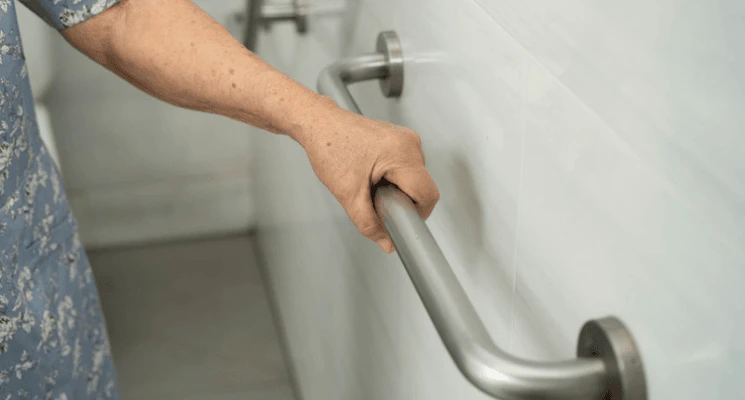
4. Add Grab Bars/Handrails in the Bathroom
Bathrooms are where most home falls happen, and it’s not hard to see why with hard tiles, standing water, and nothing to hold onto. Attaching a grab bar or a handrail next to the toilet and inside the shower gives older people something solid to steady themselves on, rather than reaching for a towel rail that was never built to take their weight. In the shower area, it is ideal to have a built-in shower seat.
5. Put Down Non-Slip Mats
Wet tiles are slippery, no matter how careful someone is. A non-slip mat inside the shower and a bath mat with a rubber underside outside it make the whole routine safer, and they’re one of the cheapest changes on this list. You can even get anti-slip tiles installed if you’re not worried about some additional expense.
6. Sort Out the Stairs
If there’s a staircase in the house, it deserves its own look. Handrails on both sides make a real difference for someone favoring one hand or one side, and edging the steps with a contrasting strip helps make each one easier to judge, especially in low light.
If climbing stairs has become genuinely difficult, it may be worth considering whether a bedroom on the ground floor is a better long-term setup.
7. Keep Everyday Items Within Easy Reach
A cupboard that requires a step stool to reach the top shelf is asking for trouble. Move the things that get used daily, for instance, mugs, medication, reading glasses, and the TV remote, down to a height that doesn’t involve stretching, climbing, or bending too far.
8. Choose Furniture That’s Stable, Not Just Comfortable
A soft, low sofa might be comfortable to sit in but difficult to get out of. Furniture with firm arms to push up from and sturdy legs that won’t slide on tile makes getting up and sitting down far less of an effort. Sharp coffee table corners are also worth rounding off or padding, given how often they end up at hip height during a stumble.
9. Look Into a Medical Alert or Check-In System
Even a well-proofed home can’t rule out every fall or every bad day. A simple wearable alert button, or even a standing agreement to check in by phone at set times, means help isn’t dependent on someone being able to get to a phone after something’s gone wrong.
10. Bring In a Home Nurse for Regular Check-Ins
Proofing the house handles the physical risks, but it doesn’t cover medication schedules, changing mobility, or the kind of health changes that are easy to miss day to day. A nurse at home can check vital signs, manage medication, and flag anything that needs a doctor’s attention before it becomes a bigger problem.
For families juggling work and their own households, it also means the responsibility of care isn’t sitting on one person’s shoulders alone.
A Quick Home Safety Checklist
Worth going through room by room:
- Clear clutter from hallways and walkways
- Remove or secure loose rugs
- Add nightlights and accessible light switches
- Install grab bars by the toilet and in the shower
- Use non-slip mats in the bathroom
- Add handrails and edge marking on stairs
- Move everyday items to easy-to-reach heights
- Swap in stable, easy-to-rise-from furniture
- Set up a medical alert or regular check-in routine
- Arrange regular visits from a home nurse
Final Thoughts
None of these changes need to happen all at once, and none of them require ripping out a bathroom or replacing every piece of furniture in the house. Most are small, inexpensive fixes that can be done easily with the help of a handyman. These small fixes can make daily life easier for elderly people and they can move around with a lot more confidence.
And for the parts that go beyond what a grab bar or a night light can cover, a nurse at home in Dubai is there to fill the gap, with the medical training to notice what the rest of us might not.