Forget long clinic queues or waiting in traffic, now the therapy comes to you. In Dubai, physiotherapy at home offers an easy, practical, and convenient way for patients to recover.
At-home physiotherapy can help treat a number of conditions including chronic pain, poor mobility, post-surgery related challenges, stress and, sports injuries. You can easily book the service and receive personalized treatment without leaving your home from certified and highly trained professionals.
Conditions Addressed in Physiotherapy at Home
An at-home physiotherapy caters to all sorts of patients faced with the following challenges and conditions:
1. Post-Surgery Challenges
Pain after surgery is common, making movement difficult and daily activities challenging. Many also face joint stiffness and muscle weakness. Home physiotherapy helps manage pain and regain strength safely.
2. Sports Injuries
Sports injuries are frequent among athletes. Many result in strains, sprains, or ligament tears, which cause a lot of pain and swelling, and also restrict movement for many.
3. Chronic Pain
Arthritis, fibromyalgia, and persistent joint pain can be quite debilitating because they restrict movement and reduce the quality of life for such patients. In many cases, they suffer from constant fatigue, stiffness, and loss of physical strength.
4. Restricted Mobility
Issues related to balance, coordination, or flexibility can make even simple tasks hard to perform and severely impact their independence. With physiotherapy, there is a better chance of recovery and living a healthy life.
5. Stroke Recovery
A stroke can affect movement and coordination, making daily tasks harder. Many also experience weakness on one side of the body, stiffness, or trouble walking. Home physiotherapy offers a safe and supportive way to improve control, balance, and regain independence.
6. Back & Neck Pain
Any sort of pain can interrupt daily life and lower energy. Back pain or neck pain is particularly common as it often results from incorrect posture, strain, or inactivity.
Treatments Offered in At-Home Physiotherapy
Therapists use various techniques and treatments to help you recover fully and safely:
1. Manual Therapy
Manual therapy utilizes a wide range of techniques, like soft tissue mobilization, joint mobilization techniques, and manual stretching exercises, to help improve flexibility, relieve tension, and alleviate stiffness.
2. Exercise Therapy
In exercise therapy, the patient’s own body weight or band exercises are used to activate weak muscles. Certain slow range-of-motion exercises are also frequently used to help with joint stiffness among injured patients or those who have undergone surgery.
3. Pain Relief Techniques
These commonly include heat therapy and cold therapy. In heat therapy, the therapist uses warm packs to relax stiff muscles and boost blood flow. In contrast, in cold therapy, the opposite happens; they reduce inflammation and soreness with ice packs. Some physiotherapists also use TENS; it is a small device that sends gentle electrical pulses to block pain signals and provide relief without medication.
4. Postural Correction
With postural correction, you learn to sit, stand, and move without stressing your back. In addition, ergonomic guidance helps adjust daily movements and lifting.
5. Respiratory & Breathing Techniques
Simple respiratory and breathing techniques improve lung function and strengthen your core. Sometimes, specialized techniques like diaphragmatic breathing are also used to improve oxygen flow and reduce stress.
6. Stretching Exercises
Static stretches keep muscles in a fixed position to extend them, dynamic stretches move joints and muscles continuously, and PNF stretching helps improve flexibility past your usual threshold.
7. Rehabilitation Tools
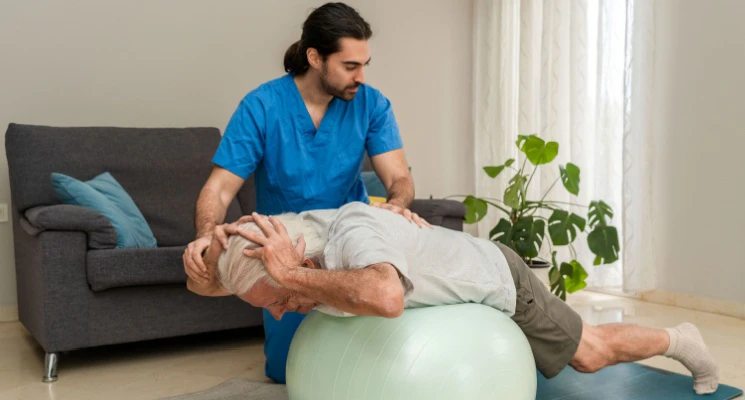
Rehab tools such as tubing or resistance bands allow safe strength exercises without bulky equipment, while small weights or household items help build functional strength. Foam rollers and stability balls train the core and relax tight muscles.
8. Gait & Functional Training
Gait training rebuilds your walking and movement skills gradually, while stair practice and transfers, part of functional training, help you move safely across surfaces. Athletes benefit from sport-specific drills that bring back performance and restore confidence.
9. Neurological Techniques
Neurological approaches usually involve motor control exercises to retrain movement post-stroke or nerve damage. Coordination and reflex training improve the body’s reactions and help patients regain control.
Conclusion
At home physiotherapy brings customized recovery solutions that blend seamlessly with your life. It treats multiple conditions using safe and specialized techniques, offering expert care without added stress.
If you or your loved ones want to avoid the hassle of traveling to a clinic, just book your physiotherapy at home session today via the ServiceMarket website or app! Receive tailored treatment plans that fit your lifestyle and goals.